
Emergency Preparedness Month: Is Your Drinking Water Ready?
Posted by Michele Priest on Sep 15th 2026
September is National Preparedness Month, a time to take a closer look at what it will take to keep your household safe if an emergency disrupts your normal routine.
Preparedness isn't just about having flashlights and canned food in a closet. It is about thinking through the everyday necessities you depend on and having a plan for when they are suddenly unavailable.
One of those necessities is water.
A wildfire, hurricane, flood, earthquake, severe storm, power outage or even a water-main break can affect access to safe drinking water. In some situations, your tap may stop working. In others, water may still come out of the faucet, but local officials may tell you not to drink it.
The good news is that preparing for a water emergency doesn't have to mean filling your garage with cases of bottled water.
A better approach is to think in terms of options: have some safe water stored, understand how to treat water when appropriate, know what your filtration system can and cannot do, and pay attention to instructions from local authorities.
Emergency water preparedness is not simply about storing water. It is about knowing your options and knowing their limitations.
Why Emergency Preparedness Starts at Home
National Preparedness Month is observed each September to encourage individuals, families and communities to prepare for emergencies and disasters. FEMA Ready Campaign has emphasized four basic preparedness actions:
- Know the risks
- Make a plan
- Build an emergency supply kit
- Get involved in your community
Those steps sound simple, but they can make a meaningful difference when normal routines are disrupted.
 The best way to start is to think about what your household relies on every day.
- Electricity.
- Refrigeration.
- Transportation.
- Communication.
- Food.
- And, of course, water.
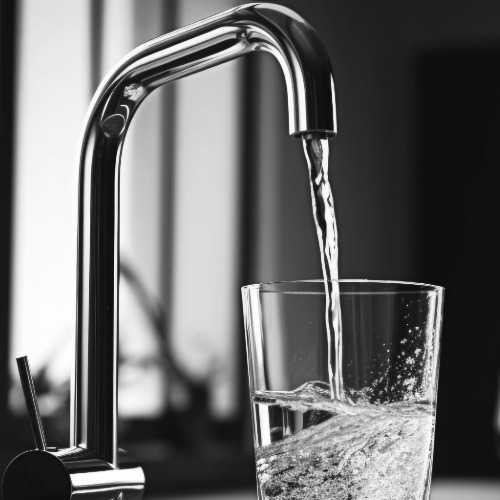
Most of the time, we turn on the faucet without giving it a second thought. An emergency can change that very quickly.
That's why September is a good time to ask a simple question: If I couldn't rely on my normal water supply tomorrow, what would I do?
Water Is One of the Most Important Emergency Supplies
The CDC recommends preparing and storing an emergency water supply. That water may be needed for drinking, cooking, food preparation and personal hygiene.
Unopened commercially bottled water is a reliable emergency supply, and having some stored water available is an important part of preparedness.
But there is another question worth asking: What happens if the emergency lasts longer than expected?
That is where having a plan for treating additional water can become valuable.
Store Water—and Have a Backup Plan
There is no reason to think of water storage and water filtration as competing approaches. They can work together.
Stored water provides an immediate supply when an emergency occurs. A suitable water-treatment or filtration method can provide another option when additional water needs to be treated, depending on the source and the type of contamination involved.
The CDC's emergency-water guidance specifically tells people to prepare by storing water and learning how to make water safe. Its current guidance includes boiling, chemical disinfection and filtration among the methods that can be used in appropriate circumstances.
That is an important distinction.
Preparedness isn't about choosing between bottled water and filtration. It is about having more than one way to access safe water.
Can You Filter Water During an Emergency?
Yes, filtration can be part of an emergency water plan, but the type of filter matters.
The CDC specifically includes filtration among the methods that can be used to make water safer during an emergency. But it also cautions that portable water filters do not remove all types of germs.
This is why it is important to understand the capabilities of the specific filtration system you own. Know what it is certified to treat. Different filtration technologies are designed to address different contaminants.
For example, the CDC explains that filters with an absolute pore size of 1 micron or smaller can remove parasites such as Giardia and Cryptosporidium, while a filter with an absolute pore size of 0.3 micron or smaller can remove bacteria and parasites. Most portable filters, however, do not remove viruses.
Some more advanced treatment technologies have different capabilities.
Never assume that every water filter works the same way.
Before relying on a filtration system for emergency preparedness, read the product information and understand what it is designed and certified to remove. Look for applicable NSF certification and specific contaminant reduction claims.
What Can a Water Filter Remove?
The answer depends on the filtration technology.
The CDC recommends checking a filter's label to determine which specific germs or chemicals it is designed and certified to remove. Some systems are designed primarily to improve taste and odor, while others are designed to address specific contaminants.
The distinction matters during an emergency.
- A filter intended to improve taste is not necessarily a filter intended to remove microorganisms.
- A filter designed to remove parasites isn't necessarily designed to remove viruses.
- A filter designed to remove microorganisms isn't necessarily designed to remove every chemical contaminant.
When evaluating a water filtration system for preparedness, look for specific performance information rather than relying on broad marketing statements such as "purifies water" or "removes contaminants."
The CDC's guidance on home water treatment makes the same basic point: check the system's label and choose a system based on the specific germs or chemicals you are concerned about.
When Should You Boil Water?
Boiling is one of the most established methods for making water safer when the concern is disease-causing microorganisms.
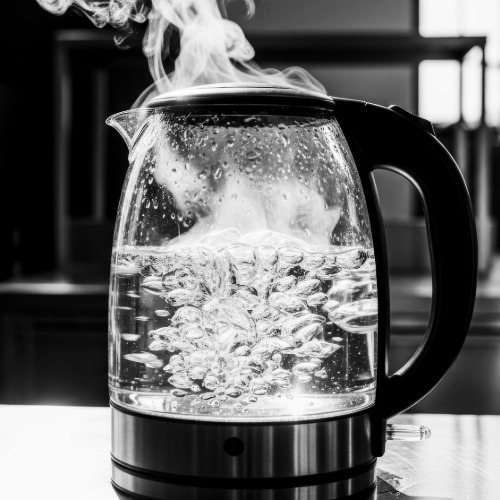 The CDC says boiling is the best way to kill germs in water. If water is cloudy, the CDC recommends first filtering it through a clean cloth, paper towel or coffee filter, or allowing it to settle and then drawing off the clear water. The clear water should then be brought to a rolling boil for one minute. At elevations above 6,500 feet, the CDC recommends boiling for three minutes.
After boiling, allow the water to cool and store it in clean, sanitized containers with tight covers.
The EPA similarly recommends boiling water for at least one minute during an emergency and explains that boiling is intended to kill disease-causing microorganisms.
But boiling has an important limitation. Boiling does not remove most chemicals, heavy metals or other non-biological contaminants. That is why the type of emergency matters.
When Should You NOT Filter or Boil Water?
This may be the most important emergency-water lesson in the entire article.
If water is contaminated with fuel, toxic chemicals or radioactive materials, boiling or disinfecting it will not make it safe to drink.
The CDC specifically warns that water containing fuel or toxic chemicals cannot be made safe through boiling or disinfection. Instead, people should use bottled water or another safe source and contact their health department for specific guidance.
The EPA makes the same distinction. Its emergency disinfection guidance explains that boiling and disinfection can kill disease-causing microorganisms but do not destroy heavy metals, salts and most other chemicals.
This is why you should never assume that simply running questionable water through a filter, or boiling it afterward, makes it safe.
If local authorities issue a "Do Not Drink" or "Do Not Use" advisory, follow their instructions.
Your emergency plan should always include a way to receive official information.
Emergency Water: Know What the Advisory Means
Not all water emergencies are the same. Local officials may issue different types of drinking-water advisories depending on the problem.
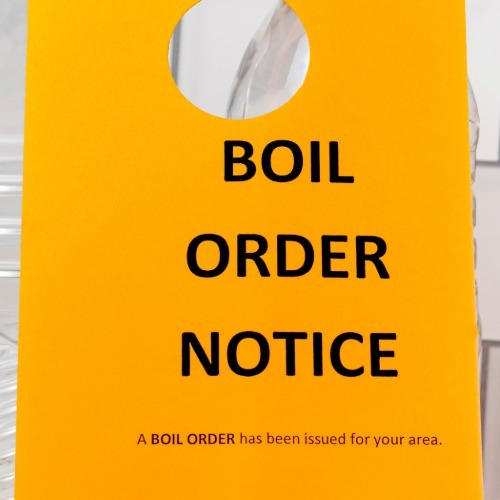 For example, a Boil-water Advisory generally means people should follow instructions to boil water before drinking or using it for certain purposes.
Understand the difference between the CDC’s different advisory levels: Boil Water, Do Not Drink, and Do Not Use.
The CDC advises people to follow recommendations from their local health department when a drinking-water advisory is issued. That is why emergency preparedness isn't just about what you have stored in your house. It is also about knowing where to get trustworthy information.
Your local water utility, health department and emergency management agency should be among your primary sources during a water emergency.
A Simple Emergency Water Plan
Think of your emergency water plan as several layers.
It is important to be prepared for different emergency situations.
Normal Water Service is interrupted
Boil-water advisory
You need additional water and have a water filtration system
Water is cloudy
Water may contain fuel or toxic chemicals
Officials issue a "Do Not Use" advisory
The goal is not to memorize every possible emergency. The goal is to understand that different water problems require different solutions.
Build Your Emergency Supply Kit
Water is only one part of household preparedness.
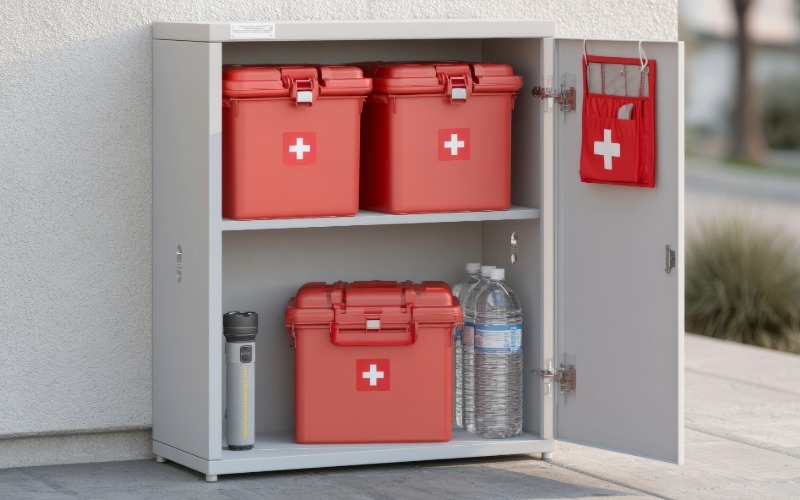
FEMA recommends having an emergency supply kit with basic supplies that can help your household manage during and after a disaster.
Your kit might include:
- Water
- Nonperishable food (for infants, children, adults and pets)
- Flashlights (with extra batteries)
- First-aid supplies
- Necessary medications
- Personal hygiene supplies
- Phone charging equipment
- Important documents
- Cash
FEMA also recommends considering individual household needs when building an emergency kit. And don't forget about your water equipment.
If you have a filtration system, make sure you know how it operates in an emergency. Check the filter's condition, understand its replacement schedule and keep necessary replacement filters or components available.
Preparedness is much easier when your equipment is ready before you need it.
Make an Emergency Communication Plan
Imagine an emergency where cell service is limited, roads are closed or family members are in different locations. What would everyone do? Ready.gov has some suggestions:
A household emergency plan should answer basic questions:
- Where will we meet?
Choose a location near home and another location outside your immediate area.
- How will we communicate?
Make sure family members know who to contact and how to get important information.
- Where will we go if we need to evacuate?
Know your local evacuation routes and identify potential destinations.
- What about pets?
Include pets in your emergency planning. Know where they could go if your household needs to evacuate.
- Does anyone have special needs?
Consider medications, mobility equipment, communication needs and other supplies that may not be easily replaced during an emergency.
Identify meeting places, emergency contacts and evacuation routes should be part of every emergency plan.
Preparedness Doesn't Have to Happen All at Once
One reason people put off emergency preparedness is that it can seem overwhelming. It doesn't have to be.
Start with one thing.
- First:Check your water supply.
- Calculate how much water your household needs for three days.
- Next:Review your emergency kit.
- Replace expired items and make sure important supplies are easy to find.
- Then: Check your water filtration system.
- Know what it is designed to remove. Check the filter. Make sure replacement filters are available. Know how it can it be used in an emergency.
- Finally: Review your family plan.
- Make sure everyone knows what to do, where to go and how to get reliable information.
Small steps add up.
Emergency Preparedness Is About Having Options
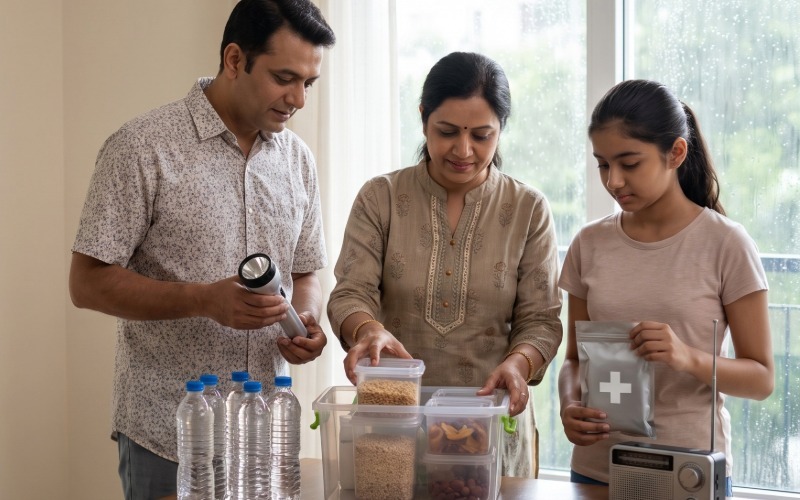
We don't know when an emergency will happen. We don't know how long it will last. And we don't always know exactly how it will affect our homes or communities. What we can do is prepare.
- Keep an emergency supply of water.
- Know how to make water safer when appropriate.
- Understand your filtration system.
- Know when boiling is appropriate and when it isn't.
- Pay attention to local drinking-water advisories.
- Keep an emergency kit ready.
- And make sure your family knows the plan.
That is what preparedness really means. It isn't about living in fear or expecting a disaster around every corner. It's about making a few decisions while life is normal so that you don't have to make all of those decisions during a crisis.
Your Emergency Water Plan Can Start Today
National Preparedness Month is a good reminder to look beyond the obvious emergency supplies and consider something we often take for granted: access to safe water.
Bottled water can provide an important emergency supply. But preparedness can go further.
Having a way to appropriately treat or filter additional water can give your household another option when normal water service is disrupted, provided the water source, treatment method and specific contaminants are appropriate for that method.
The CDC's guidance makes the point clearly: prepare by storing water and learning how to make water safe during an emergency.
So, this September, take a few minutes to prepare.
Store some water. Know your filtration options. Understand your equipment. Make a plan. Stay informed.
Because when an emergency happens, being prepared means you don't have to start figuring out everything from scratch.