
National Fitness Day 2026
Posted by Michele Priest on Apr 30th 2026
Every year on the first Saturday of May, National Fitness Day encourages people to take a closer look at their health, not just through exercise, but through the daily habits that support good health. While movement is often the focus, research consistently shows that fitness outcomes depend just as much on nutrition and hydration for exercise, highlighting the importance of hydration in overall performance and recovery.
|
Key Takeaway: Long-term health and fitness depend on the combined role of exercise, nutrition, and hydration, with proper hydration supporting performance, recovery, and overall body function. Choosing clean, high-quality drinking water helps reduce exposure to contaminants and supports better overall wellness. |
If you’ve ever felt fatigued halfway through a workout or struggled to recover the next day, the issue may not be effort. It may be how well your body is being supported.
True fitness is built on three pillars: exercise, nutrition, and hydration, all working together.

Benefits of Exercise for Long-Term Health and Fitness (And Why Hydration Matters)
 Regular physical activity is one of the most well-documented ways to improve both physical and mental health. According to the Centers for Disease Control and Prevention (CDC), adults should aim for at least 150 minutes of moderate-intensity aerobic activity each week, along with strength training exercises.
Consistent exercise has been shown to:
- Improve cardiovascular health
- Strengthen muscles and bones
- Support weight management
- Reduce the risk of chronic diseases
- Improve mood and cognitive function
Beyond the physical benefits, exercise helps regulate stress hormones and supports better sleep, both critical for recovery and long-term wellness.
However, exercise also places increased demand on the body. Without proper fuel and hydration, performance and recovery can suffer.
Nutrition for Exercise: Supporting Energy, Strength, and Recovery
Food plays a direct role in how your body performs during and after exercise. The nutrients you consume influence everything from muscle contraction to immune response.
The Harvard T.H. Chan School of Public Health recommends a balanced diet built around whole, minimally processed foods.
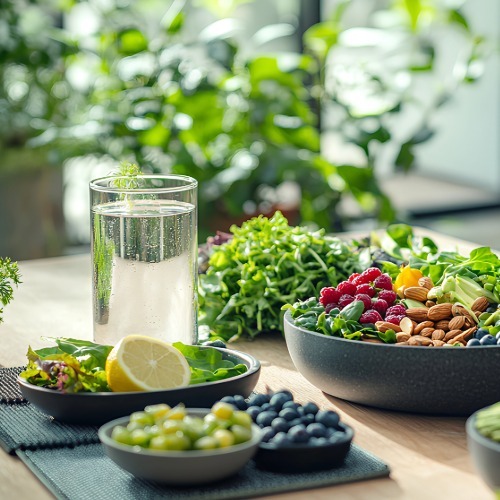 A well-rounded approach includes:
- Carbohydrates to fuel workouts and maintain energy levels
- Protein to repair and rebuild muscle tissue
- Healthy fats to support hormone function and sustained energy
- Micronutrients (vitamins and minerals) for cellular health
Nutrition also directly affects hydration. Many essential processes such as nutrient transport and temperature regulation depend on adequate fluid levels.
Hydration for Exercise: Why It Matters for Performance and Recovery
Water is essential for nearly every function in the body. During exercise, its role becomes even more critical.
According to Johns Hopkins Medicine, drinking enough water is important, especially when sports are part of your routine. Proper hydration supports endurance, strength, and overall physical performance.
Even mild dehydration can have noticeable effects. Research published in Medicine & Science in Sports & Exercise indicates that losing as little as 2% of body weight in fluids can negatively impact performance and cognitive function.
Additional findings in the same journal also show that even mild dehydration can reduce endurance capacity and impair short-term memory and focus during physical activity.
 Common Effects of Dehydration on Performance
- Reduced endurance and strength
- Increased fatigue
- Muscle cramps
- Slower recovery
- Decreased focus and coordination
Hydration also affects how efficiently your cardiovascular system works. When fluid levels drop, the body must work harder to circulate blood and regulate temperature.
How Much Water Should You Drink When Exercising?
Most people should drink water before, during, and after exercise to stay properly hydrated. The American Council on Exercise recommend about 16–20 ounces a few hours before activity, 7–10 ounces every 10–20 minutes during exercise, and 16–24 ounces after workouts for every pound lost through sweat. Individual hydration needs vary based on factors such as climate, workout intensity, body size, age and personal sweat rate.
A simple way to monitor hydration is by checking urine color: pale yellow typically indicates adequate hydration. Dark yellow is a sign of dehydration.

Why Drinking Water Quality Matters for Hydration and Health
While drinking enough water is essential, the quality of that water—especially access to clean, high-quality drinking water—plays an important role in overall health.
Recent research, and agencies like the Environmental Protection Agency (EPA) have highlighted growing concerns around contaminants such as microplastics, which have been detected in water sources around the world. Research published in Frontiers in Sports and Active Living (2025) examines how microplastics may have implications for respiratory function, inflammation, and overall physical performance.
 Although research is still developing, scientists are actively studying how these particles interact with the human body.
In addition to microplastics, drinking water may contain:
- Heavy metals
- Chemical residues
- Other environmental contaminants
For individuals focused on fitness and long-term wellness, this reinforces an important point: hydration should come from clean, high-quality drinking water whenever possible.
Clean water supports:
- Efficient nutrient transport
- Better recovery after exercise
- Reduced exposure to unwanted contaminants
How Exercise, Nutrition, and Hydration Work Together for Better Health
These three elements are not separate; they are deeply interconnected.
- Exercise creates physical demand
- Nutrition provides the fuel and building blocks
- Hydration allows the body to function efficiently
Without proper hydration, nutrients cannot be transported effectively. Without nutrition, the body cannot rebuild after exercise. Without movement, the benefits of both are limited.
Research published in the American Journal of Lifestyle Medicine (2017) and available through the National Institutes of Health (NIH) shows that physical activity, diet quality, and hydration habits are closely linked, reinforcing how these behaviors support each other.
4 Simple Ways to Improve Your Fitness Routine (National Fitness Day Tips)
National Fitness Day is a great opportunity to build sustainable habits that last beyond a single day.
- Focus on Consistency Over Intensity
You don’t need extreme workouts. Regular movement, even walking, provides meaningful health benefits.
- Build Balanced Meals
Prioritize whole foods and ensure each meal includes protein, healthy fats, and complex carbohydrates.
- Hydrate Throughout the Day
Don’t wait until you feel thirsty. By the time you feel thirsty, you are already dehydrated. Dehydration can cause a variety of health issues. Learn more about how dehydration affects the body. Consistent hydration supports better performance and energy levels.
- Choose High-Quality Water
Whenever possible, choose water that is filtered and helps reduce microplastics in drinking water and other pollutants like PFAS in drinking water. 
Final Thoughts: A Smarter Approach to Fitness
National Fitness Day is a reminder that health is not built on a single habit. It’s the result of daily choices that support your body over time.
Exercise strengthens the body.
Nutrition fuels it.
Hydration keeps everything working as it should.
And when hydration comes from clean, properly filtered water, you’re supporting your body at a deeper level, helping it perform, recover, and stay resilient.
As National Fitness Day approaches on May 2, 2026, take the opportunity to look beyond just workouts. Focus on nutrient-dense, whole foods and using a water filtration system that is NSF certified to reduce contaminants in drinking water, meaning it has been tested against established performance standards. Focus on the full picture of health and build a routine that you can commit to every day.
Set a goal to move more, eat better and stay hydrated in 2026.