Does Boiling Water Remove Microplastics?
Posted by Michele Priest on May 11th 2026
Microplastics are now being detected in drinking water sources around the world, prompting a common question: can boiling water remove them? The short answer is no. Boiling water alone does not remove microplastics. In some cases, especially in hard water, boiling may cause some particles to bind to minerals and clump together, but those particles still need to be filtered or separated to be removed.
|
Key Takeaway: Boiling water may change how some microplastic particles behave, but it does not reliably remove them from drinking water. Research suggests that reducing microplastics, PFAS, and other contaminants generally requires certified filtration systems designed for specific contaminants present in the water. |
That is different from the role boiling plays in emergency water safety. Public health agencies recommend boiling water in certain situations to reduce microbial risks, but that guidance does not apply to contaminants like microplastics.
The World Health Organization (WHO) has published a detailed report on microplastics in drinking water, highlighting ongoing research into potential health effects.
As awareness grows, many people look for simple, practical solutions they can use at home. In their drinking water advisories overview, the Centers for Disease Control and Prevention (CDC) recommends boiling water in certain emergency situations to reduce microbiological risks from germs, but that guidance does not apply to contaminants like microplastics.

What Are Microplastics and Why Are They in Drinking Water?
Microplastics are small plastic fragments typically defined as being less than 5 millimeters in size. Many are far smaller, measuring in microns or even nanometers, which makes them difficult to detect and even harder to remove. A study published in the Journal of Contaminant Hydrology (May 2024) found that up to 83% of tap water samples worldwide contain microplastics.
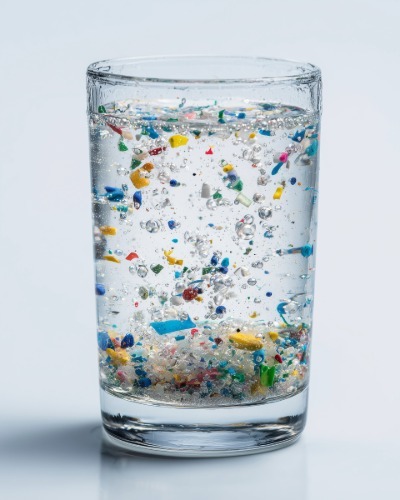 These particles enter water supplies through a variety of pathways:
- The breakdown of larger plastic waste.
- Synthetic fibers released during laundry.
- Industrial and urban runoff.
- Degradation of packaging materials.
Because of their size, some microplastics can pass through conventional water treatment processes. This is why concerns around microplastics in drinking water continue to grow, especially as research explores how frequently they appear in household water supplies.
As one Stanford Medicine News Center article noted, “We’re born pre-polluted,” referencing research into microplastics found in the placentas and meconium of newborns.
The U.S. Department of Health and Human Services has announced funding for research into the health effects of microplastics, including programs focused on exposure and prevention. $144 million was allocated to STOMP, a program focused on studying and reducing microplastic exposure in the human body. The development of STOMP further emphasizes the concern over microplastics.
Why Some People Think Boiling Water Removes Microplastics
A Smithsonian Magazine article summarizing research published in an American Chemical Society journal reported that hard tap water, when boiled, would enable microplastics to bind with minerals, making them easier to filter away.
When water containing minerals like calcium is boiled, those minerals begin to form solid particles, often referred to as limescale. During this process:
- Microplastics can attach to mineral surfaces.
- Particles may clump together into larger formations.
- Some of these clusters may settle or become easier to filter.
Understanding this distinction between changing particle behavior and actually removing contaminants is key when evaluating different water treatment approaches.
Why Boiling Alone Doesn’t Remove Microplastics
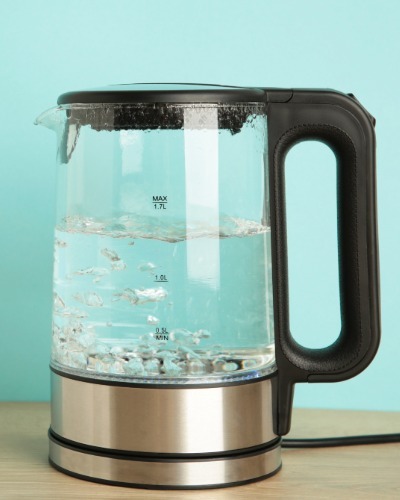 Rather than removing microplastics, boiling can change how some particles behave in the water, particularly in hard water where minerals form scale. Even in those cases, the particles still need to be filtered or separated to be removed.
When microplastics bind with minerals, they are not necessarily eliminated; they are simply attached to larger particles that still remain in the water unless they are physically removed.
Without filtration or separation, those particles remain in the water unchanged. In practical terms, boiling may help change how particles interact, but it does not complete the removal process. Research on boiling water and micrrplastics shows that a separate removal step is still required.
The Role of Water Hardness
One reason boiling appears effective in some cases but not others comes down to mineral content.
Hard water:
- Contains higher levels of calcium and magnesium.
- Produces more mineral particles during boiling.
- May be more likely to trap some microplastics as minerals form.
Soft water:
- Contains fewer dissolved minerals.
- Produces less scale during boiling.
- Is less likely to cause particle clumping that could aid later filtration.
This means the outcome of boiling water varies depending on local water chemistry. In some regions, the effect may be noticeable; in others, it may be minimal.
Why Boiling Water is Not a Complete Solution
While boiling is useful for reducing microbial risks, it is not a reliable method for reducing contaminants such as microplastics, PFAS, or dissolved metals.
Concentration of Contaminants
As water boils, some of it evaporates. This can leave behind higher concentrations of certain contaminants and dissolved sustances, including:
- Dissolved solids
- Heavy metals
- Chemical contaminants
This includes substances that boiling does not remove, such as PFAS, often referred to as “forever chemicals”.
The U.S. Environmental Protection Agency (EPA) recently launched the PFAS OUT initiative to work with communities to reduce exposure in drinking water.
No Impact on Dissolved Pollutants
Boiling does not remove PFAS, many industrial chemicals, or other dissolved contaminants that remain in the water after heating. These contaminants require different treatment methods entirely.
Risk of Additional Plastic Exposure
If water is heated in plastic-containing equipment, it may introduce new microplastics into the water. Over time, repeated heating can contribute to additional particle release, offsetting any potential benefit.

What Research Says About Boiling and Microplastics
When all findings are considered together, a clear picture emerges:
- Boiling can cause microplastics to bind with minerals.
- This process may reduce some free-floating particles under certain conditions.
- Actual removal generally occurs when particles to be filtered or separated.
- Effectiveness depends heavily on water composition.
Even in best case scenarios, boiling is not a complete or consistent solution. It is a partial step that requires additional action to be meaningful. Research into microplastics is still evolving, and detection methods and exposure levels can vary across studies.
How to Reduce Microplastics in Drinking Water?
If the goal is to reduce microplastics in drinking water, filtration is generally a more practical approach than boiling. Consumers should look for independently NSF-certified drinking water treatment systems that are tested for the specific contaminants they want to reduce, since microplastics, PFAS, lead, and arsenic may require different treatment methods.
Water filtration systems are designed to address contaminants by physically reducing particles and other impurities.
For households looking for a more reliable approach, search for drinking water systems that are designed to reduce a broad range of contaminants at the point of use. Microplastics, PFAS, and lead require different treatment approaches, so the system should be matched to the contaminants of concern. The most effective systems are those tested and certified for the specific contaminants present in your water.

Boiling vs. Filtration: Understanding the Difference
Unlike boiling, which may only alter how particles behave, filtration focuses on physically reducing contaminants from the water. Comparing boiling and filtration highlights why they serve different purposes.
The difference between boiling and filtration become clearer when compared side by side.
| Method | Microplastics | PFAS | Bacteria | Reliability |
|---|---|---|---|---|
| Boiling | No | No | Yes | Low |
| Filtration | Yes* | Yes* | Yes* | High |
* Performance depends on system design, certification, and contaminant type.
Boiling:
- Helps reduce microbial risks in certain emergency situations.
- Does not reliably remove microplastics.
- May concentrate certain contaminants that remain after evaporation.
Filtration:
- Focuses primarily on physically reducing particles from the water
- May address a wider range of contaminants, depending on the system.
- Offers more consistent results when the filter is certified for contaminants of concern.
Boiling still has value, particularly in emergency situations where microbial safety is the primary concern. However, it is not designed to handle the types of contaminants commonly discussed today.
A More Complete Approach to Drinking Water Quality
 As awareness of water quality grows, it is becoming clear that not every type of filtration can address every concern.
Understanding both microplastics in drinking water and PFAS in drinking water helps paint a more complete picture. These contaminants behave differently, which means solutions must be chosen accordingly.
Rather than choosing a method based solely on marketing claims, a more effective approach focuses on:
- Identifying potential contaminants in your drinking water
- Using appropriate and certified treatment methods
- Reducing exposure through consistent use of certified filtration systems
This shift from reaction to prevention is where meaningful improvements in water quality begin. As research continues to evolve, understanding how different contaminants behave is key to making informed decisions about drinking water.
Final Takeaway
Boiling water may change how some microplastic particles behave, but it does not eliminate them from drinking water. Studies have detected microplastics in tap water samples from many parts of the world, suggesting that exposure may be widespread. For households focused on reducing exposure, the more effective approach is to use treatment methods specifically designed to remove contaminants from drinking water.


FAQ's: Boiling Water and Microplastics Reduction
- Does boiling tap water remove plastic particles?
Boiling tap water does not reliably remove plastic particles. It may cause some microplastics to bind to minerals in hard water, but those particles still need to be removed through filtration or separation. - Can boiling water reduce nanoplastics?
Current evidence does not show that boiling alone reliably removes nanoplastics. Because nanoplastics are even smaller than microplastics, they may be harder to capture without specialized treatment. - Does hard water make boiling more effective?
Hard water may make boiling somewhat more helpful because calcium and magnesium can form scale that traps some particles. Even then, boiling is only a partial step and does not remove those particles by itself. - Does boiling remove PFAS?
No. Boiling does not remove PFAS from drinking water and may increase the concentration of contaminants left behind as water evaporates. - What works better than boiling for microplastics?
Filtration is generally a more practical approach because it focuses on physically reducing particles rather than simply changing their behavior in the water.