What Are Cysts In Water?
Dec 15th 2025
The safety and well-being of your family are of the utmost importance. When you pour a glass of water for your loved ones or use it to prepare a meal, you trust that you're providing them with something clean and healthy. While public water systems are amazing achievements, they aren't foolproof. Beneath the surface of seemingly clear water, cysts can linger, posing a risk you might not even know exists.
|
Quick Answer Waterborne cysts like Giardia and Cryptosporidium are microscopic parasites that can cause gastrointestinal illness if ingested. They can enter drinking water through contaminated sources, which is why proper treatment and filtration are important. |
By understanding what these tiny parasites are, you gain the knowledge to take control. In this article, we will cover more on these waterborne challenges and provide definitive, proactive steps you can take to ensure your family enjoys safe drinking water.
COMMON TYPES OF WATERBORNE CYSTS
Cysts in water are the hardy, thick-walled, dormant forms of microscopic parasites and other pathogens. When these cysts are ingested through contaminated drinking or recreational water, they can develop into active parasites in the body and cause intestinal illnesses.
Two types of cysts are consistently the most prevalent and concerning in water supplies. The first is Cryptosporidium. Often called "Crypto", this parasite causes the diarrheal disease cryptosporidiosis. Its protective cyst wall makes it extremely resistant to chlorine and chemical disinfectants. Because of its incredibly small size, it can easily slip past some conventional filtration methods and is a primary cause of major waterborne outbreaks.
The second type is Giardia duodenalis. Responsible for the illness giardiasis, this parasite's cyst is one of the most common causes of waterborne illness globally. While slightly easier to defeat with very high levels of disinfectant than Crypto, the Giardia cyst remains a significant threat.
HOW CYSTS ARE TRANSMITTED TO WATER
The primary pathways for the waterborne transmission of cyst parasites are:
- Fecal contamination of source water: Cysts enter water supplies primarily through the environment, linking back to the waste of humans and animals, including wildlife, livestock, and domestic pets. Surface water sources like rivers, lakes, and reservoirs are highly susceptible. When heavy rains cause agricultural runoff or flooding, this contaminated water can flow directly into drinking water sources.
- Wastewater treatment failures: While modern municipal wastewater treatment is highly effective, failures, aging infrastructure, or heavy rain events can lead to untreated or partially treated sewage entering the source water.
- Drinking water treatment plant breaches: Although facilities employ various treatment barriers, Cryptosporidium's high resilience means that even a temporary compromise in the filtration process can allow cysts to pass through the system and enter the public distribution network.
- Contamination in distribution systems: Cracks or breaks in aging water pipes can allow contaminated groundwater or surrounding soil water to be sucked into the main line, a process known as back-siphonage. This can reintroduce contamination to otherwise clean water.
ARE WATER CYSTS DANGEROUS?
Yes — waterborne cysts, such as Cryptosporidium and Giardia, can be dangerous. While a healthy adult might recover without lasting effects, the associated illnesses can be particularly dangerous for older adults, young children, and people with compromised immune systems. In these vulnerable populations, diarrhea can be chronic and severe, leading to life-threatening dehydration and systemic complications.
SYMPTOMS OF WATER CYST-RELATED ILLNESSES
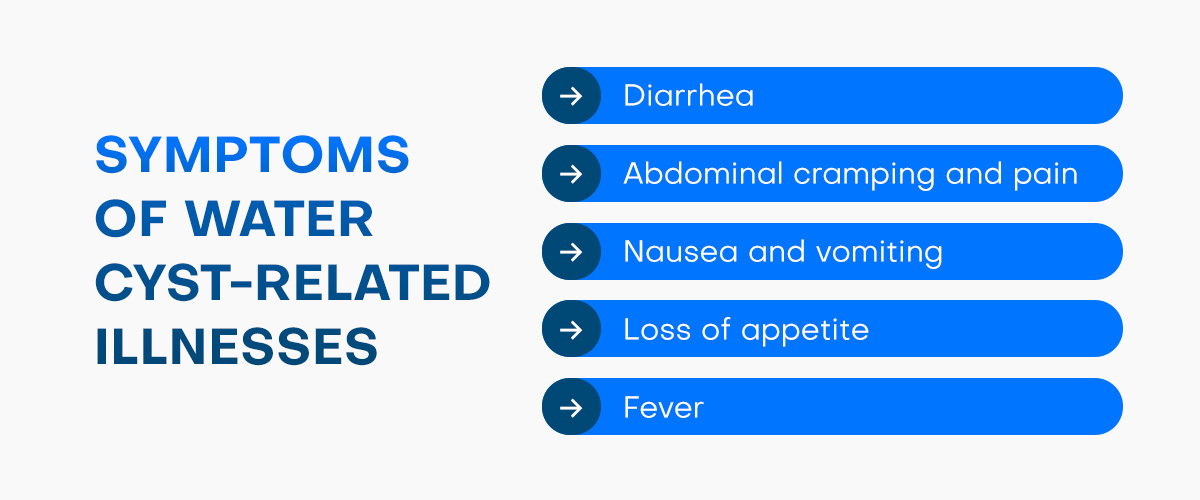
Ingesting water contaminated with parasitic cysts can lead to debilitating and uncomfortable illnesses, collectively known as waterborne diseases. The onset of symptoms typically occurs a few days to two weeks after exposure. For both Giardiasis and Cryptosporidiosis, the symptoms are primarily gastrointestinal and may include:
- Diarrhea: This is often severe, watery, and sometimes persistent for weeks.
- Abdominal cramping and pain: The effects can range from mild discomfort to intense, sharp pains.
- Nausea and vomiting: These are common responses as the body attempts to expel the parasite.
- Loss of appetite: A lack of appetite can result from gastrointestinal distress.
- Fever: While less common or severe than with bacterial infections, a low-grade fever may occur.
Weight loss is also a possible complication, especially in severe cases.
MEDICAL TREATMENT FOR WATERBORNE ILLNESSES
The treatment for illnesses caused by waterborne protozoan cysts varies depending on the parasite and the severity of the infection. For most healthy adults, the focus of early treatment is largely supportive care. Due to the potential for severe diarrhea, the most critical step is to aggressively replace lost fluids with water and other liquids to prevent dehydration. Rest is also essential for recovery, allowing the body time to fight the infection.
For severe cases, prolonged symptoms, or immunocompromised individuals, prescription medications are often necessary. Metronidazole is often used for Giardiasis. Alternative medications include tinidazole, albendazole, paromomycin, and nitazoxanide.
Nitazoxanide is the most common antiparasitic drug used for Cryptosporidiosis. While it is approved by the U.S. Food and Drug Administration (FDA), it is important to note that this drug may not be effective for everyone, particularly those with severely weakened immune systems. Treatment focuses mainly on managing symptoms and controlling the underlying immune deficiency.
If you suspect a waterborne illness, consult a health care provider immediately for a proper diagnosis and treatment plan.
HOW TO PREVENT EXPOSURE TO WATER CYSTS
Preventing exposure to waterborne cysts requires a layered approach, combining these strategies:
- Follow health advisories: Pay close attention to public health alerts. If a "boil water" advisory is issued in your state or municipality, you must boil your water before using it for drinking, cooking, or brushing teeth.
- Practice strict hygiene: Cysts are spread through human waste. Always wash your hands thoroughly with soap and water after using the restroom, changing diapers, and before preparing food. It prevents the spread of infection within the household.
- Be cautious with recreational water: Avoid swallowing water while swimming in pools, lakes, rivers, or streams, even if the water appears clean. Pools should be properly chlorinated, but remember that Cryptosporidium is highly chlorine-resistant.
- Install a certified home water filtration system: A cyst reduction water filtration solution is the most effective safeguard for your daily drinking and cooking water. Municipal treatment is designed for large-scale safety, but it cannot account for all pipe breaks and distribution system failures. A point-of-use cyst water filtration system provides the final, nonnegotiable barrier at the tap. Look for drinking water systems that have undergone rigorous third-party testing for cyst reduction, ensuring they physically treat the microscopic threat.
GET THE DEFINITIVE SOLUTION FOR CYST-FREE WATER
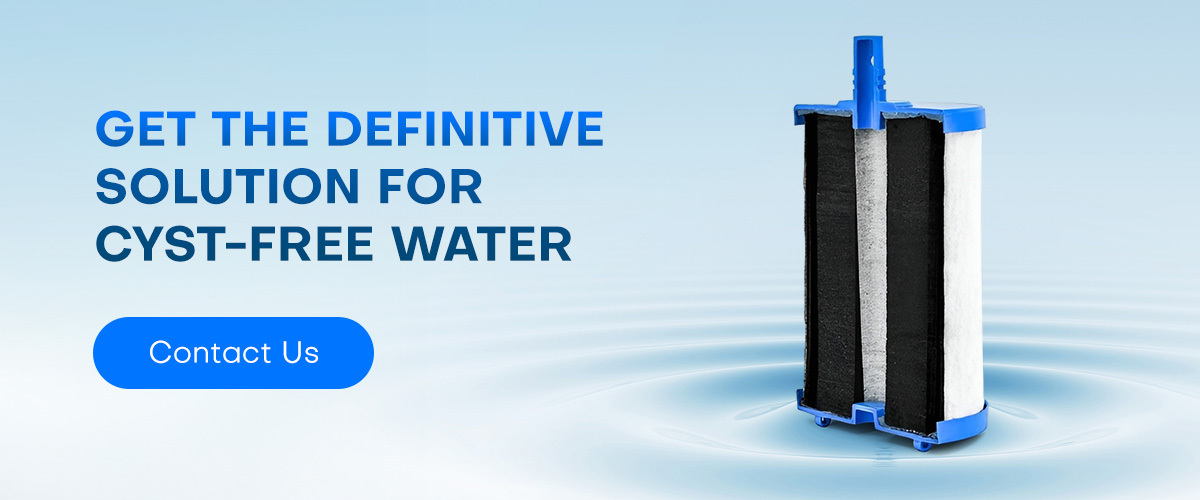
When it comes to protecting your loved ones from waterborne cysts, generic filtration is not enough. You need a proven, high-performance technology, and Multipure can help. Our solid carbon block filtration technology stands as an effective safeguard against cysts in drinking water. It is a meticulously engineered, sub-micron physical barrier that leverages activated carbon's power for chemical reduction and a densely compacted structure for mechanical filtration. This dual-action design reliably traps cysts.
We offer drinking water systems with NSF certification under Standard 53 for the reduction of cysts, such as Giardia and Cryptosporidium, by an impressive 99.95%. This independent certification affirms that the technology acts as a reliable sub-micron physical barrier, capturing contaminants in water before they reach your glass.
Take the next step in securing your family's health by exploring Multipure's certified drinking water systems, such as the Aqualuxe or Aquapremier, which are NSF 53 certified for cysts and Protocol P231 certified for bacteria and viruses. You can also contact us to learn more about cyst removal in our water filtration solutions.