When Can Babies Start Drinking Water?
Jul 18th 2025
As a parent, it’s natural to want to provide the best and safest nourishment for your little one. Understanding when and how to introduce water into a baby's diet is crucial for their health — and knowing which type of water is safe for your baby is equally important.
How Soon Can Babies Have Water?
Babies can drink water at around 6 months old. They usually start having small sips of water at this age. Their readiness for water usually coincides with the introduction of solid foods. Giving your baby water before 6 months can reduce their intake of vital calories and nutrition, among other health issues.
For the first 6 months, babies receive essential nutrients from breast milk and/or formula. While it may be tempting to give your little one a sip of water on a hot day or when they have a fever, there is no need. Breast milk is 87% water, giving infants plenty of hydration. Baby formula is also a good source of hydration since it is composed of 85% water.
If you feed formula, the water used to make it is essential. Unfiltered water from the tap can contain contaminants like lead, which becomes concentrated when boiled and can lead to significant health risks and developmental delays.
Unfiltered private well water can have nitrates. Infants have a higher gastric pH and only 60% NADH-dependent methemoglobin reductase activity compared to adults. This means they are at increased risk of methemoglobinemia — a rare blood disorder — when exposed to nitrates through unfiltered water.
Why Is Water Unnecessary Before 6 Months?
Since babies take in all the healthy fluids they need from breast milk and/or formula, giving them water is unnecessary and can be dangerous. Offering infants water before 6 months can adversely affect their health, putting them at risk of the following:
Reduced Appetite for Breast Milk or Formula
Babies have small tummies. On the day of their birth, their stomachs are as tiny as 1 to 2 tablespoons, and there is only gradual growth over time. That's why it's important to only fill that small space with the nutrients they need for healthy growth and development.
When you give your baby water, their stomach will fill up fast, and they won't have the appetite for nutrient-rich breast milk and/or formula — the primary source of vitamins, minerals, calories, and fat. By six months, your baby's tummy has grown enough that it can accommodate a little bit of water.
Water Intoxication
Another risk involved in giving infants water is water intoxication. As healthy as water is, too much can be toxic, overwhelming the kidneys. Besides having small stomachs, babies also have small kidneys, which cannot remove excess water from the body. The extra water ends up in the bloodstream and dilutes the fluids, lowering the concentration of essential electrolytes like sodium.
When your baby drinks more water than their kidneys can handle, it can lead to serious health effects, so exercising caution and waiting until they are at least 6 months old is crucial.
Top 3 Safe Ways to Introduce Water to Babies
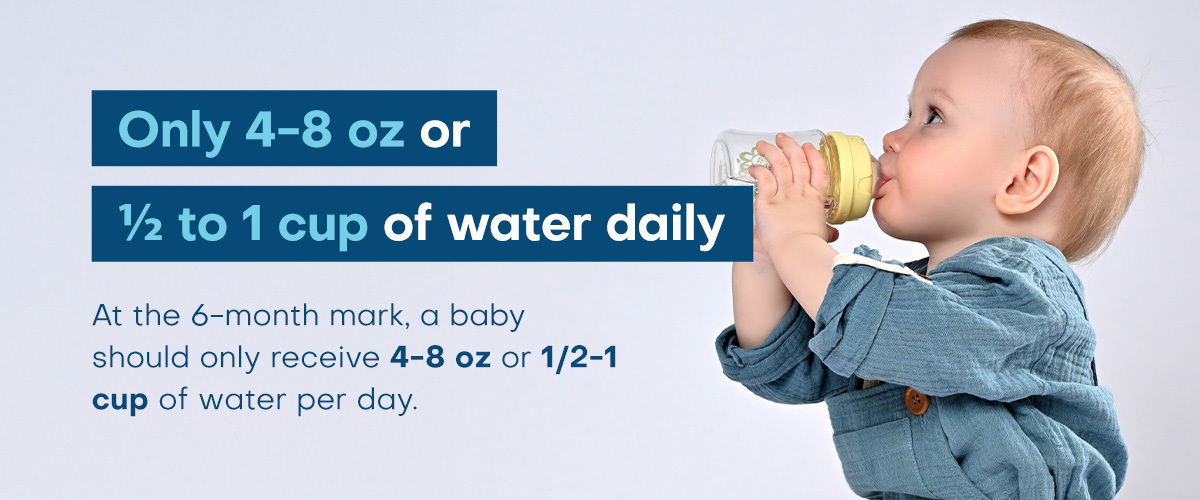
Introducing water to infants in a safe and controlled way is essential. At the 6-month mark, a baby should only receive 4-8 oz or ½-1 cup of water per day. Here are three safe ways to offer water to your baby:
1. Sippy Cup Introduction
A beaker or sippy cup is designed to help babies transition from breastfeeding or bottles to drinking independently. Remember that it's a gradual process. Offer small amounts of water in a sippy cup with a soft spout during meal times. Using a sippy cup can also help them learn motor skills like hand-to-mouth coordination and gripping.
2. Open Cup Practice
Babies should only start open cup training once they are ready, usually after they become comfortable using a sippy cup. Pour a small amount of water into a small open cup. You can start by holding the cup up to your baby's mouth and letting them take small sips. After a few sips, let them try on their own, but be prepared for spills as they learn.
3. With Meals and Snacks
The best time to offer water to your baby is during meals or snack time. At 6 months old, most babies are ready to start transitioning to solid food, so this is a great time to offer them a little bit of water alongside their meals or snacks.
The Importance of Safe Drinking Water for Babies
Ensuring babies have access to safe drinking water is crucial for their health and development. Due to their undeveloped immune systems and smaller body size, infants are particularly vulnerable to waterborne microbial contaminants. Harmful bacteria, viruses, lead, and nitrates can lead to significant health risks, including gastrointestinal illnesses and developmental delays.
Filtered water is the best choice for your baby — and you! While your tap water undergoes treatment processes, it may still contain trace amounts of harmful substances. If you live on a well, your water does not go through the same treatment as municipal water, and it may contain various contaminants including arsenic and nitrates.
Even low levels of contaminants can have a significant impact on a baby's health. Filtering tap water can remove many of these harmful contaminants, providing extra protection for your baby.
Frequently Asked Questions About Giving Water to Babies
Here are a few FAQs about giving babies water:
When Is It Safe to Start Giving an Infant Water?
It's usually safe to give your baby water around 6 months. It's important to introduce infants to water in small amounts and use filtered water to avoid potential health effects.
How Much Water Should I Give My Baby?
When introducing water at 6 months, you should give your baby ½ cup to 1 cup of water daily.
What Are the Signs That My Baby Needs More Water?
Signs that your baby needs water may include sunken eyes, few to no tears when crying, fewer wet diapers, a sunken fontanelle (baby's soft spot), and irritability or drowsiness.
Experience Clean, Healthy Drinking Water With Multipure
From birth to 6 months, it's crucial to use clean, filtered water for formula — tap water that is unfiltered can introduce contaminants into the formula. After the 6-month mark, your baby can start drinking small amounts of filtered water. For both babies and adults, filtered water is the optimal choice to keep everyone in your household healthy and hydrated.
Multipure's water filtration systems can reduce various contaminants from your household water supply, so everyone can enjoy safer, healthier drinking water. Our NSF-certified systems come in multiple designs, including below-sink and countertop filters. Explore our drinking water systems or contact us to learn more today.