
Products
A lot of folks don’t really think about water. It’s one of those things everyone uses every day, but it’s something that just sits in the background of your lives, like the air you breathe, or the furniture and appliances in your homes. For most, you might assume the water you drink, you cook with, and you wash with is clean and safe. Many assume that the water in your home is the way it is, and there’s not much to do about it.
At Multipure, we know you deserve better.
Water is such an integral part of life – for meals, for hydration, for cleanliness – that enhancing the quality of your water can enhance the quality of your life.
At Multipure, we don’t just want to give you any solution to cleaner, healthier water; we want to give you the best solution to water. Better than disposable plastic bottles. Better than giant plastic jugs. Better than ineffective water pitchers. Better than little faucet attachment filters. Better than flashy marketing with no substance. Our mission is to give you the best water for yourself, for your homes, and for your families.
How Do Multipure Products Improve Your Drinking Water?
Multipure offers products to improve the water in your kitchen, bathroom, yard, and entire house. Like many water filters on the market, our drinking water filters make your water look, smell, and taste better. But, our filters do so much more than that – unlike a lot of cheap filters on the market, and unlike a lot of bottled water.
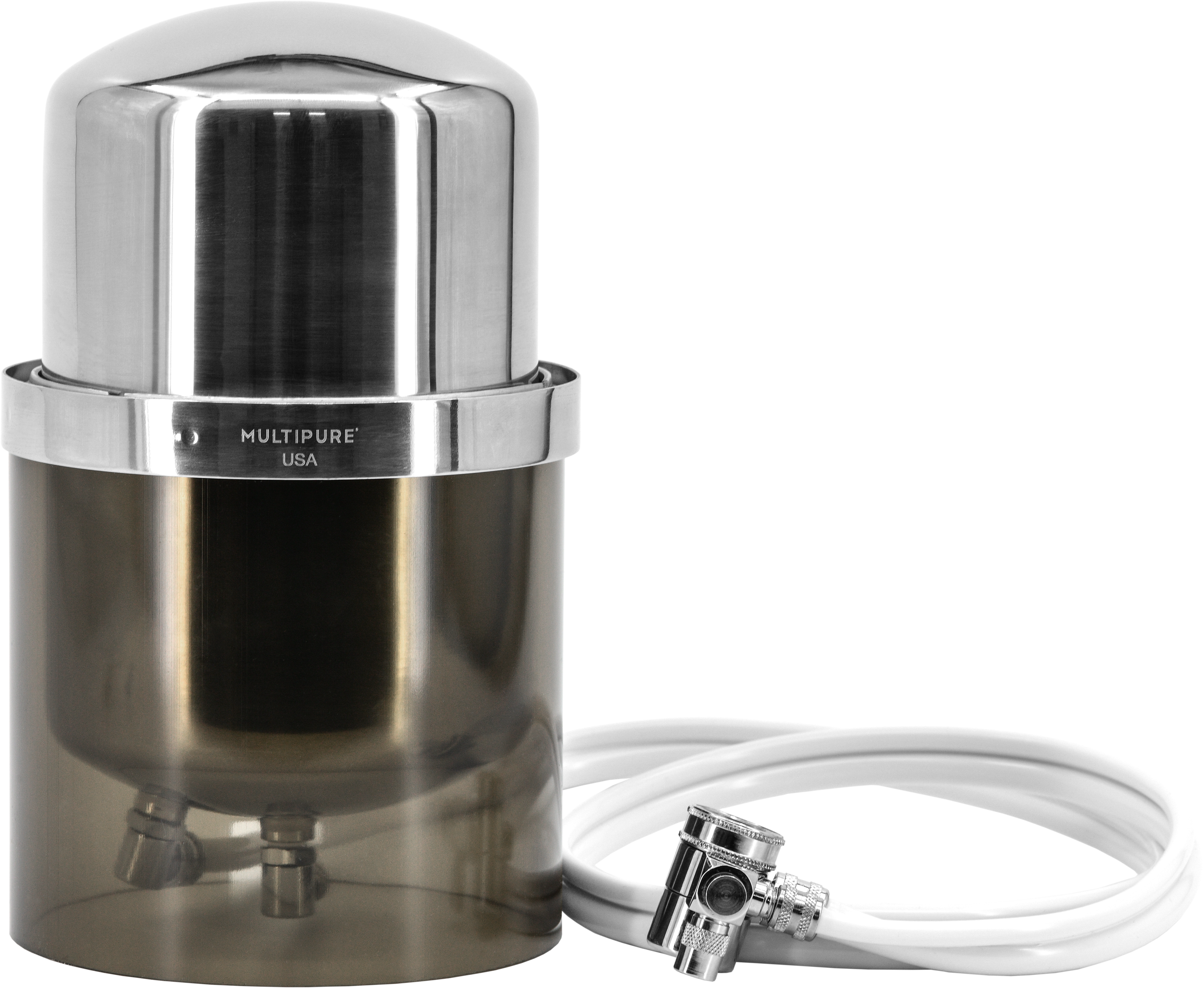
Multipure uses our proprietary solid carbon block water filters at the core of our drinking water systems. For over fifty years, we have developed, refined, and perfected this technology to bring you the best solid block carbon filters around, protecting you from an extraordinary range of drinking water contaminants.
When you look up water filtration and check out some of the products that show up, you’ll often see terms like “activated carbon” and “carbon water filter system.” But, there’s a big difference between loose carbon granules found in the cheapest water filters, and the advanced, industry-leading performance of a Multipure solid block activated carbon water filter.
That difference can be summed up
by two words: power and integrity.
Power
Power, because our solid carbon block water filters treat your water for things like particulates, chlorine, and chloramine, which make the water look, taste, and smell worse than it should. Because our filters treat your water for things like lead, arsenic, and mercury – naturally-occurring minerals and metals that can cause serious harm. Because our filters treat your water for things like pesticides, herbicides, and the “forever chemicals” – PFOA and PFOS – all chemicals that can be incredibly harmful in water. Because our filters treat your water for artificial hormones, heart medications, over-the-counter pain relievers, and other drugs that you never want to drink in your water accidentally. Because our filters treat your water for bacteria, viruses, and parasites that can cause serious infections and diseases.
Integrity
Integrity, because our performance claims have been third-party, independently tested and verified. Because we spend the time, money, and resources to have NSF International test our products, our manufacturing processes, and even our documentation for truth and accuracy. Because when it comes to our performance claims, we have nothing to hide.
How Does Multipure Compare to Bottled Water?
One of the biggest misconceptions when it comes to hydration is that bottled water is a good source for clean drinking water. Granted, if there are literally no better options available – for example, if your options are swamp water or a bottle of water from a vending machine – then, sure, the bottled water is most likely to be the better option there. But for everyday use? Compared to tap water or filtered water? Then the answer is no.
- Cost. Bottled water is expensive. One bottle of water from a vending machine or mini-mart might cost about $1.50 for 16-20 ounces. A case of bottled water might cost $10 to $20 for a pack of 24 bottles, with sizes ranging from 8 ounces to 16.9 ounces. Let’s be generous, and consider $10 for a 24-pack of 16.9-ounce bottles – that comes out to about $3.15 a gallon of water. The average price of tap water is 0.4-cents a gallon. A Multipure filter is about 12-cents a gallon.
- Quality. Bottled water is often just repackaged tap water. So for about 800% more than the cost of tap water, you can buy tap water in a plastic bottle. A plastic bottle that most likely is adding microplastic particles into the water. So, in essence, worse quality water than tap water. On the other hand, a Multipure solid carbon water filter system is certified to reduce the presence of almost 100 types of contaminants in your water.
- Waste. You know what you don’t get with a Multipure system? A bin (recycling or regular trash) full of empty plastic bottles. Bulky, useless, 400-years-long-to-degrade plastic bottles. You also don’t get a chunk of space taken up in your pantry, cupboard, garage, shelf, etc. with a case of bulky, heavy plastic bottles of water. A Multipure system can be as small as a glass of water, or as big as maybe a 2-liter bottle. When the filter cartridge needs to be changed – typically once year – you dump the old filter in the trash, where it will naturally and quickly decompose, because it’s made of carbon, not plastic.
How Do Multipure Products Improve Water Throughout the House?
At Multipure, we’re not content just to offer countertop carbon block water filters or solid carbon block water filter under sink systems for your kitchen. We want to make sure you get cleaner, healthier water for all your needs.
For your shower, we offer the Aquashower shower filter, a little something to improve the quality of your shower water. We like to think of it as a “personal spa experience” in your shower, leaving you feeling cleaner and more energized.
For your bath, we offer the Aquasplash bath ball, something as simple to use as a bath toy. Fill up your tub, swirl the Aquasplash in the water for half a minute, and you get cleaner bath water that also promotes richer suds and lather from your soap.
For your yard, garden, and pets, we offer the Aquagrow, an inline garden hose filter that gives you better water for your flowers, vegetables, water dishes, pet baths, or anything else that would benefit from cleaner water outdoors.
If you’re looking to improve water throughout your entire house, we offer the Aquasource, a whole-house system that connects near your water heater to deliver cleaner, chlorine- or chloramine-free water at every faucet in your home.
Why Are Multipure Drinking Water Filters Better than Others?
There are a lot of reasons Multipure is the best in the business when it comes to drinking water filtration. The first of which is our filter technology itself. Our drinking water systems use our proprietary solid carbon block filters. A solid block carbon filter takes granular activated carbon (GAC) – useful for its ability to get certain contaminants to “stick” to it – and then gets rid of all of GAC’s disadvantages. By compressing the carbon into a solid block, it prevents water from forming a channel in the filter – something that can happen with GAC filters where the water ends up bypassing the filter media. A solid carbon block water filter also lets the contaminants get physically trapped in all the little nooks and pores of the carbon block, making it more effective. A carbon block also allows additional filter materials to be mixed in to enhance the filter capabilities, such as Multipure’s Aquaversa and Aquaperform filters, which can treat things most filters do not, like arsenic-V, PFOA/PFOS, microcystin, bacteria, viruses, and parasites.
Multipure solid carbon water filter systems also don’t require power, which certain other water filter methods require, such as ultraviolet water purifiers. No power requirements mean you don’t need to install our system near a power outlet, don’t need to constantly change batteries for the filter to work, and still have a working water filter during a power outage.
Multipure understands that you want clean water that is convenient. A Multipure carbon water filter system means you don’t need to take trips to the store to buy and carry more cases of bottled water home when you run out; with Multipure, change the filter cartridge once a year and you’re good to go. A Multipure system means you don’t have to wait for water to slowly trickle through a filtered water pitcher or slowly fill up a clean water reservoir – Multipure solid block carbon filter systems give you clean water in real time – turn on the faucet and fill your glass or container immediately.
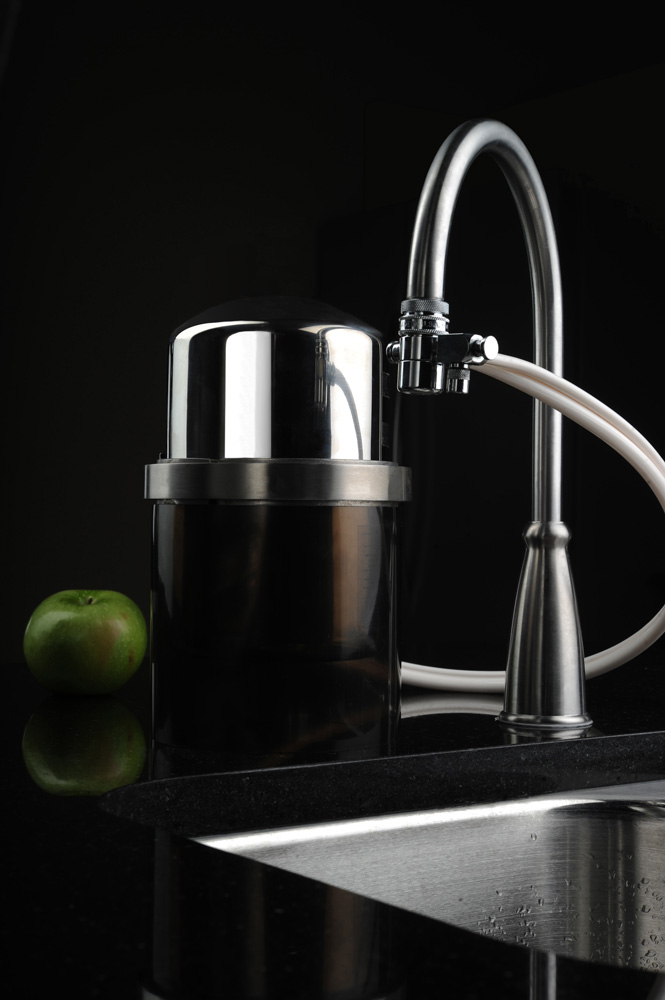
Finally, Multipure offers the advantage of experience. We’ve been in the business of water filtration for over fifty years. And water filtration isn’t just another division of our company – water filtration IS our company. Five decades of experience means that we know what works and what doesn’t work when it comes to drinking water filters. We know how to make the best solid block carbon filters around. We know how to make products that last – and we back that up with a lifetime warranty on our system housings. Some other companies may dabble in water filtration, but Multipure lives for water filtration.
Multipure means you benefit from all our knowledge, all our experience, and all our expertise when it comes to cleaner, healthier water.
Better Water for Your Home and Family
Multipure's products offer an effective, affordable, and environmentally-friendly solution to cleaner water. Power and convenience at your kitchen sink, in your bathroom, and in your yard. With a superior Multipure product, you'll never need to consider another water filtration solution again.